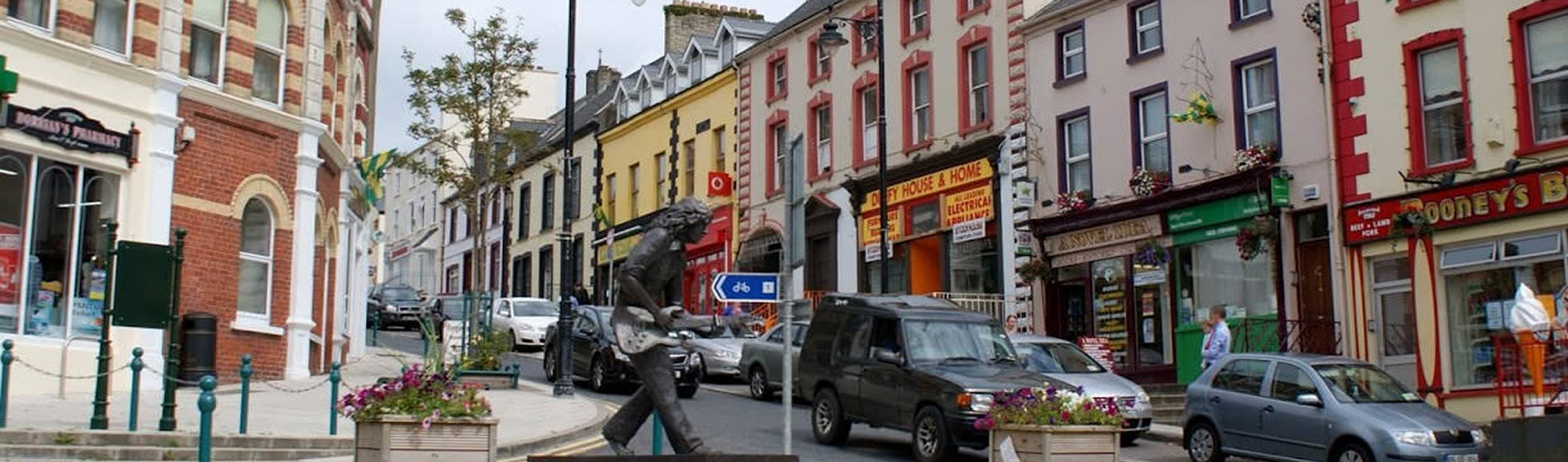
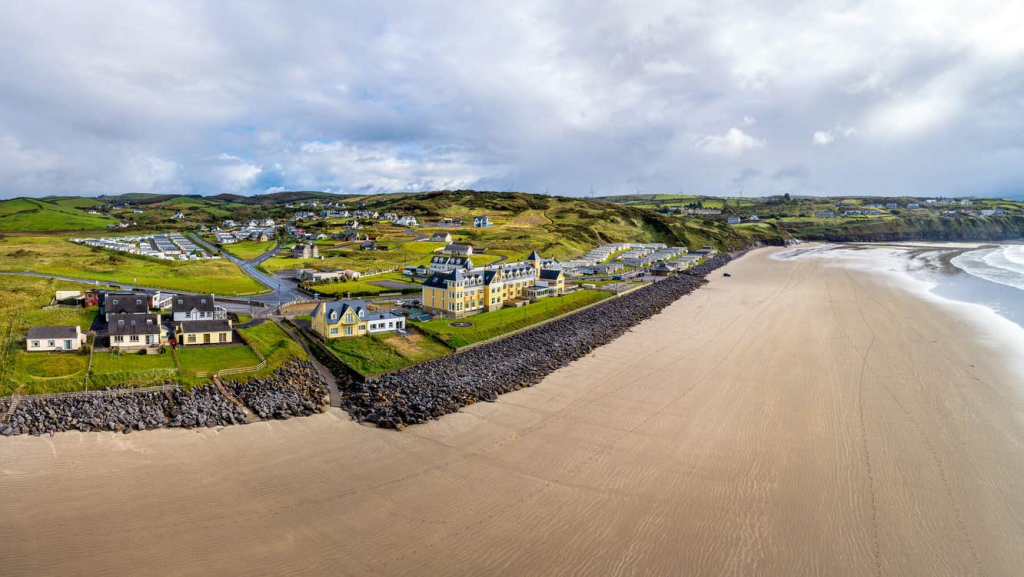
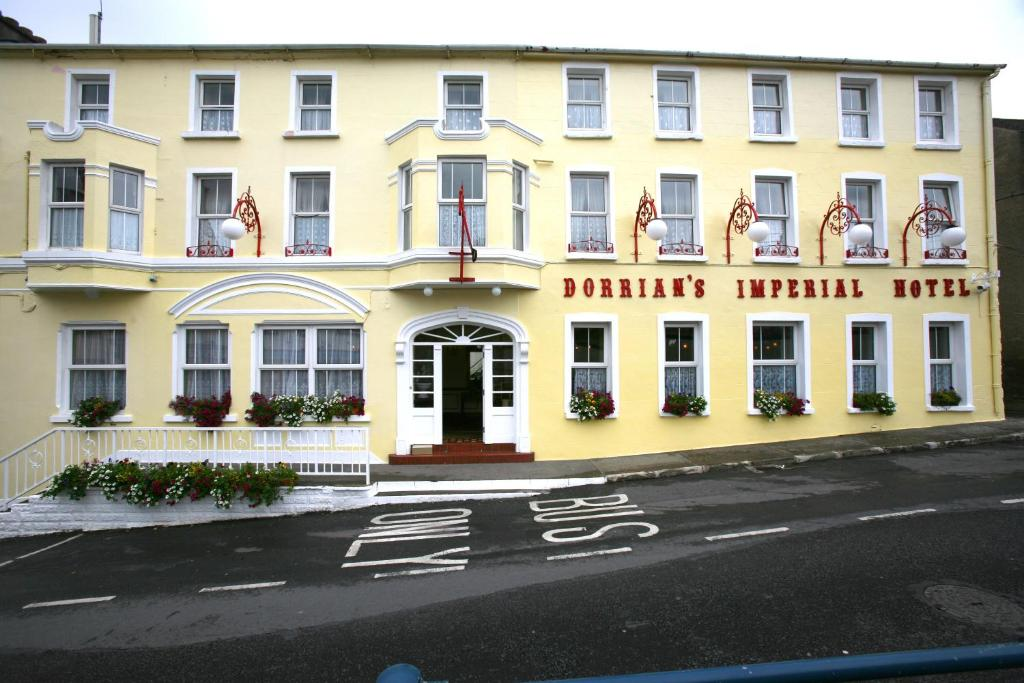
Ballyshannon's name in Irish, Béal Átha Seanaidh, which means "the mouth of Seannach's ford", recalls a 5th-century warrior slain at the crossing of the River Erne. The town has archaeological evidence of settlement stretching back to 4000 BC.
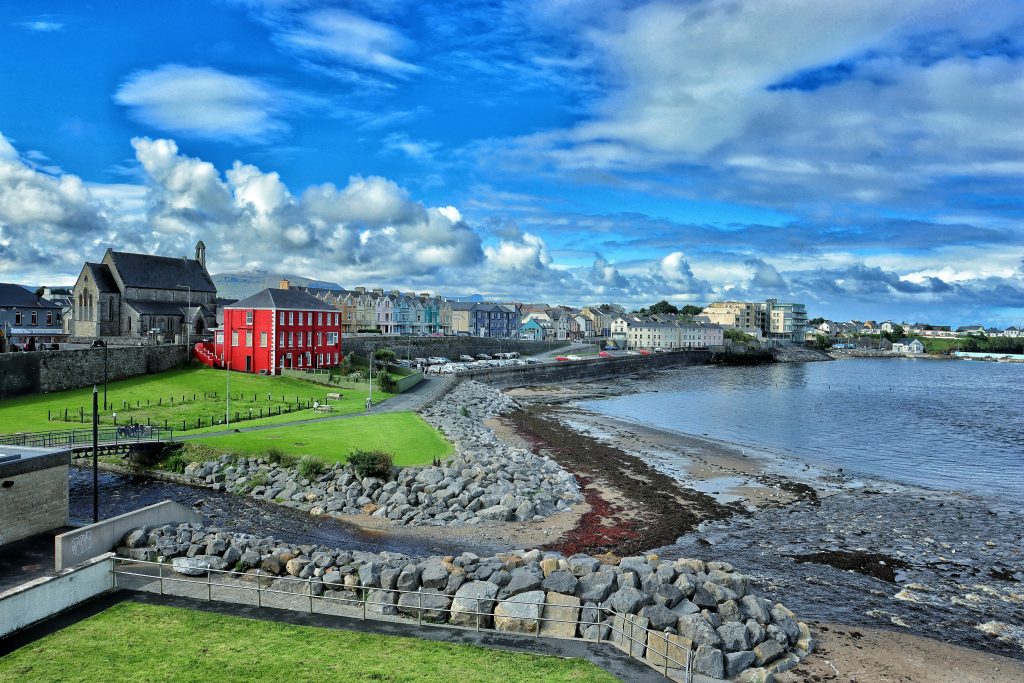
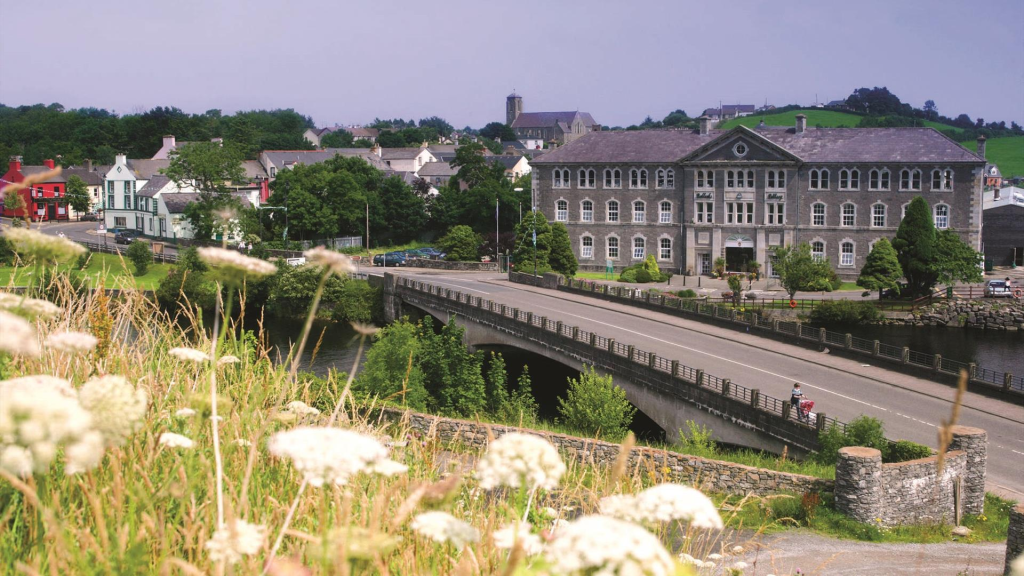
The River Erne flows through the town, widening into a sweeping estuary at Mall Quay, built in the 18th century when Ballyshannon was a busy trading port with links to Norway, France, Spain and the Americas. The fine Georgian warehouses and townhouses along the waterfront are reminders of that prosperous past.
The town is of course inseparable from the poet William Allingham (1824-1889), born here and buried in the graveyard of St Anne's Church, alongside his wife Helen Allingham, the first woman elected to the Royal Society of Watercolours. Allingham worked as a customs officer in the town for many years before moving to England to pursue a more literary life.
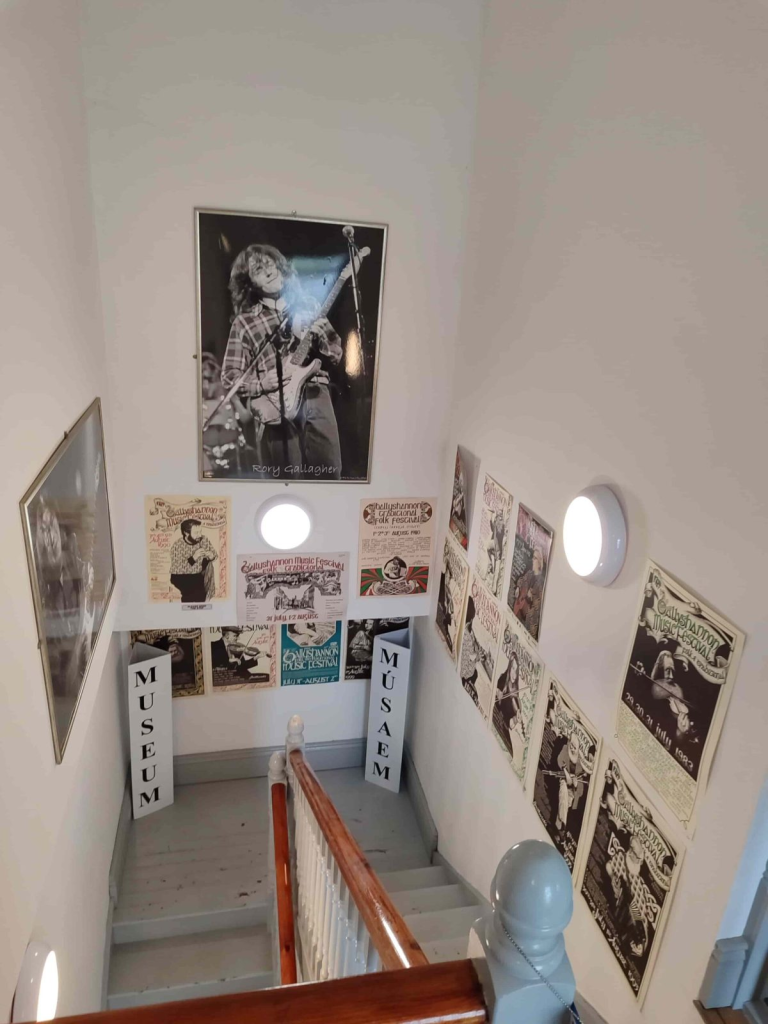
The Ballyshannon & District Museum tells the town's wider story, from the salmon fishing industry and the hydroelectric dam to the WWII Donegal Corridor, and a dedicated room honouring Rory Gallagher – well worth a visit in November.
Music and performance are woven into the town's history and culture. The Rory Gallagher International Tribute Festival has filled the streets every June Bank Holiday for over 15 years now. The Ballyshannon Folk & Traditional Music Festival, held each August, is the longest-running folk festival in Ireland. The Ballyshannon Drama Festival each spring draws competitors from across Ireland to the Abbey Arts Centre. Every November, the Allingham Arts Festival brings writers, musicians and artists from across Ireland and beyond to celebrate the town's most famous son.